
AI from Class 3: what India's curriculum change asks of schools.
From the 2026–27 session, AI and computational thinking enter Indian classrooms as a foundational skill. Here's what that means in practice for schools and parents.
 Varchas KoushikFounder · Storyteller & Learning Experience Designer
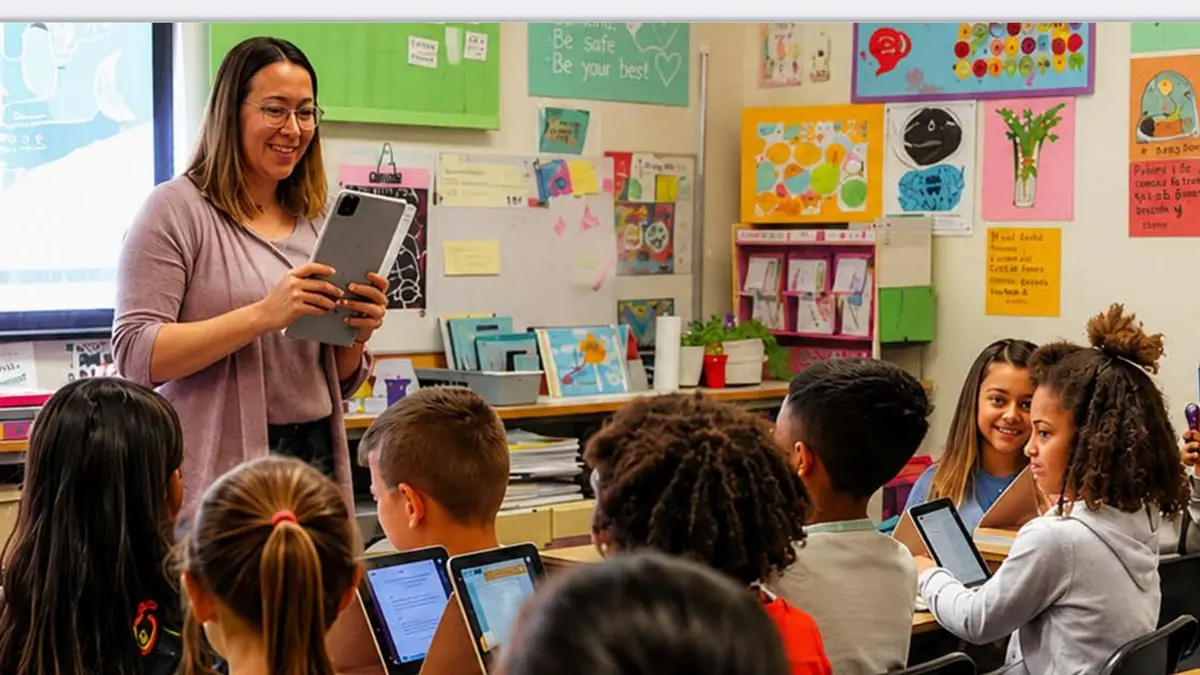
In October 2025 the Ministry of Education announced that artificial intelligence and computational thinking would be introduced into the school curriculum from Class 3 onwards, starting with the 2026–27 academic session. CBSE is leading the curriculum work with NCERT, and the framing is deliberate: AI as a foundational skill, linked to a subject every child studies, with an emphasis on ethical use and "AI for public good".
That is a bigger shift than it sounds. It moves AI from an optional senior-school elective to something an eight-year-old meets alongside reading and maths. The Secretary for School Education put it plainly: education in AI should be treated as a basic universal skill.
What "AI from Class 3" should look like
It should not look like coding. For young children, computational thinking is about patterns, sequences, sorting and simple rules — the reasoning that sits underneath programming, taught through games and stories long before a screen is involved. AI at this age is about noticing: the recommendations on a tablet, the voice assistant that misheard, the photo filter that changed a face. Curiosity and questions, not tools.
What schools will actually need
- Teachers who are confident, not experts. The announcement leans on NISHTHA training modules; the practical gap is classroom confidence, and that comes from hands-on practice rather than slides.
- Age-appropriate materials that work without expensive hardware. If it can't run in a classroom with one shared screen, it isn't ready for most schools.
- A policy on student data before any tool is introduced — the same question schools everywhere are wrestling with.
- Parents brought in early. "My child is learning AI" is either reassuring or alarming depending entirely on what the school says next.
For parents
Ask the school two things: what your child will be able to do at the end of the year, and what they will be taught to question. If the answer to the first is a list of apps and the answer to the second is silence, push. The goal of an AI curriculum for a nine-year-old is a child who asks how a machine decided something — and who knows that "the computer said so" is not an answer.
Further reading
Written by
Varchas Koushik
Founder · Storyteller & Learning Experience Designer
Founder of All Things Classroom. 10,000+ hours facilitating sessions with students across age groups and geographies; writes about game-based learning, story-driven teaching and what's possible when a lesson is designed like an experience instead of a script.
More about Varchas